Table of Contents
Last updated on March 27th, 2026 at 04:27 pm
The binge restrict cycle is one of the most common and painful patterns you can experience in your relationship with food. It usually begins with strict rules, heavy restriction, or skipping meals in an effort to gain control. But as your body and mind fight back against deprivation, intense cravings and feelings of loss of control around food often follow, leading to episodes of binge eating.
Afterward, guilt and shame fuel the urge to restrict again, and the cycle repeats. Over time, this back-and-forth can feel exhausting and impossible to escape, but understanding why it happens is the first step toward breaking free.
You might think that if you have overeaten, the most logical thing to do is to restrict your food at the next meal to avoid unwanted weight gain or “cancel out” any toxic foods you had during your binge. But in reality, this will simply cause a seemingly insatiable obsession with food. Planning to restrict your food after binge eating is actually the exact opposite of what you should be doing to prevent future binge eating.
So how can you break the vicious restrict binge cycle?
This article explores the role restriction plays in binging, and the biological reasons behind why the binge restrict cycle happens. We’ll explore to stop the vicious binge restriction cycle and be binge free for life.
What is The Binge Restrict Cycle
The binge restrict cycle is a pattern of eating where periods of food restriction are followed by episodes of binge eating. These episodes of trying to control your food followed by feeling completely out of control with your food lead to deep feelings of guilt and shame. This intense guilt and shame will then often lead you to restrict your food again following the binge in an effort to control the cycle. It’s a cycle that can feel endless and overwhelming because both restriction and bingeing behavior fuel one another.
The 5 Steps of the binge restrict cycle include:
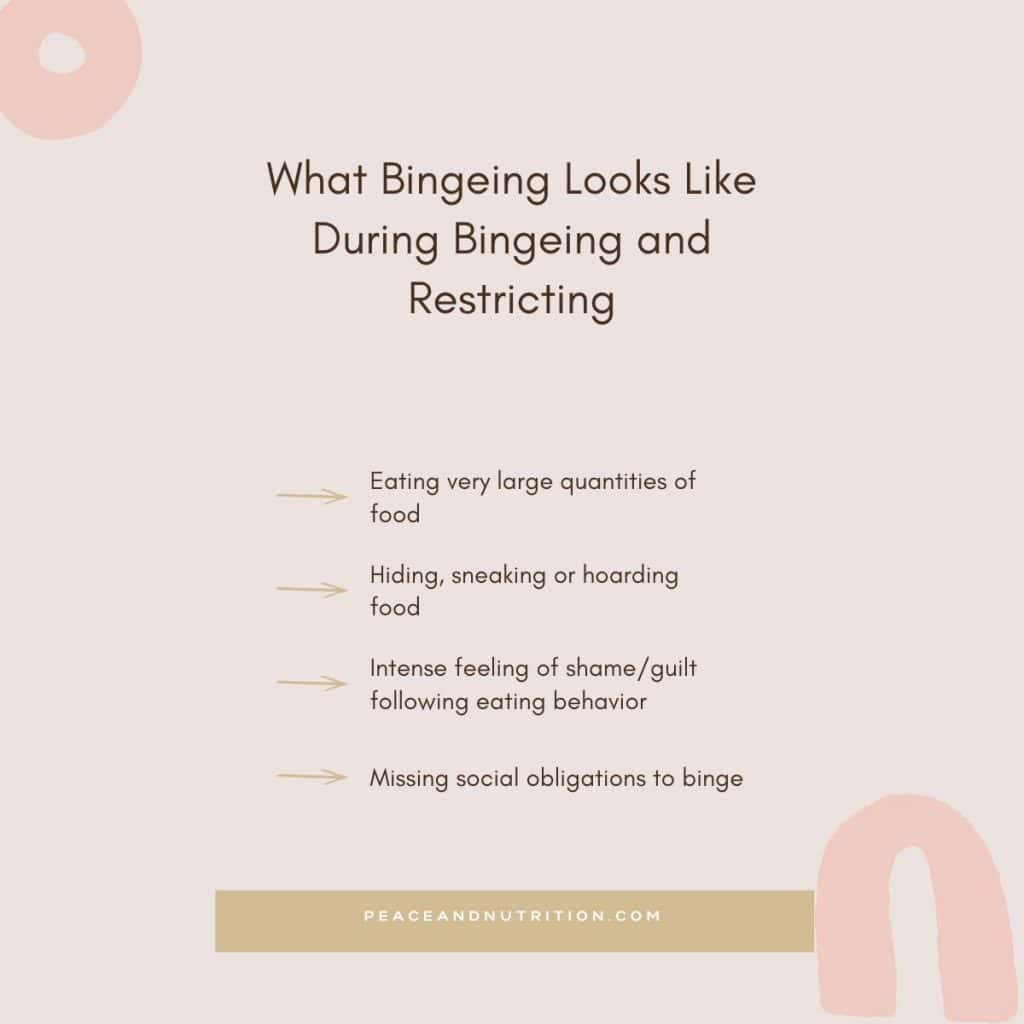
- You eating A LOT of food at one time. Significantly more than most people would eat in one setting.
- You eat rapidly because you feeling out of control with the food in front of you. Your hunger feels insatiable.
- Intense feelings of shame, guilt or fear following your binge eating
- You Hide your binge food because you are ashamed of your eating behavior
- You cut calories, food groups or entire meals the hours or days after a binge
What Triggers The Binge Restrict Cycle
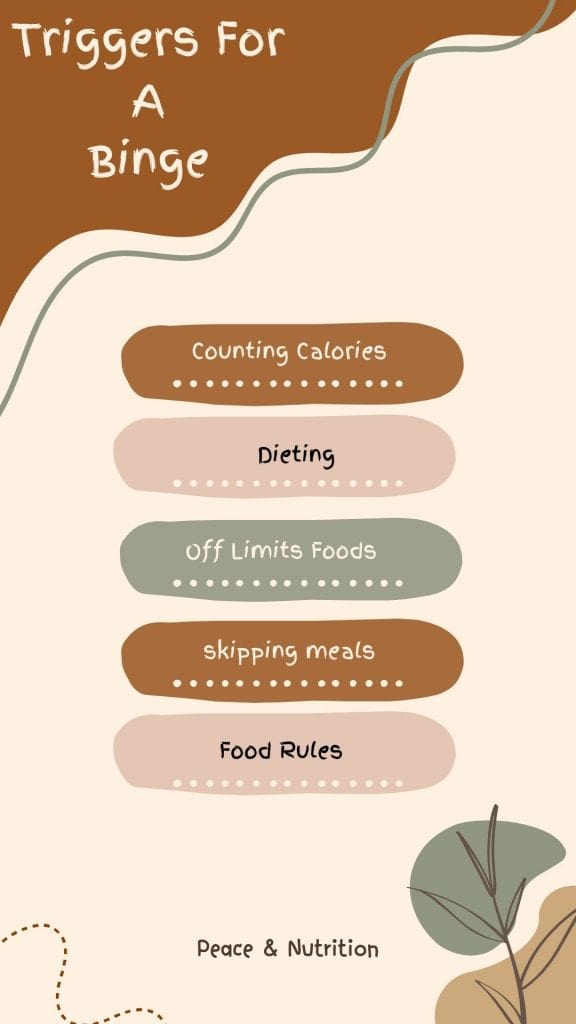
The binge restrict cycle doesn’t happen in isolation. it’s often fueled by triggers that set the cycle in motion. These triggers can be both physical and emotional, and understanding them is a key step toward breaking free.
Triggers for bingeing and restricting include includes:
- Feeling out of control with food
- Having a fear of wasting food because you’re constantly restricting food
- Guilt, shame and sadness when you can’t control what you eat
- Feeling disgusted with your body
- Feeling impulsive, urgent, and worthless when it comes to your food choices
- Cutting out food groups
- Waiting to eat until a certain time despite feeling hungry
- Intermittent fasting
- Missing social events to restrict food
- Counting or restricting your calories
- Scheduling “cheat days” for strict diets
- You Can’t stop thinking about food
- Weighing your food or restricting your portions
Why Bingeing after Restricting Happens
Let’s think back to caveman times. Over thousands of years, humans have experienced bouts of feast and famine.
Binging in historical times was pretty normal. It prepared you for inevitable famines when food was not available. It allowed you to eat enough food to store body fat for use when food was scarce and eat more when food was available.
After you restrict your food here’s what happens:
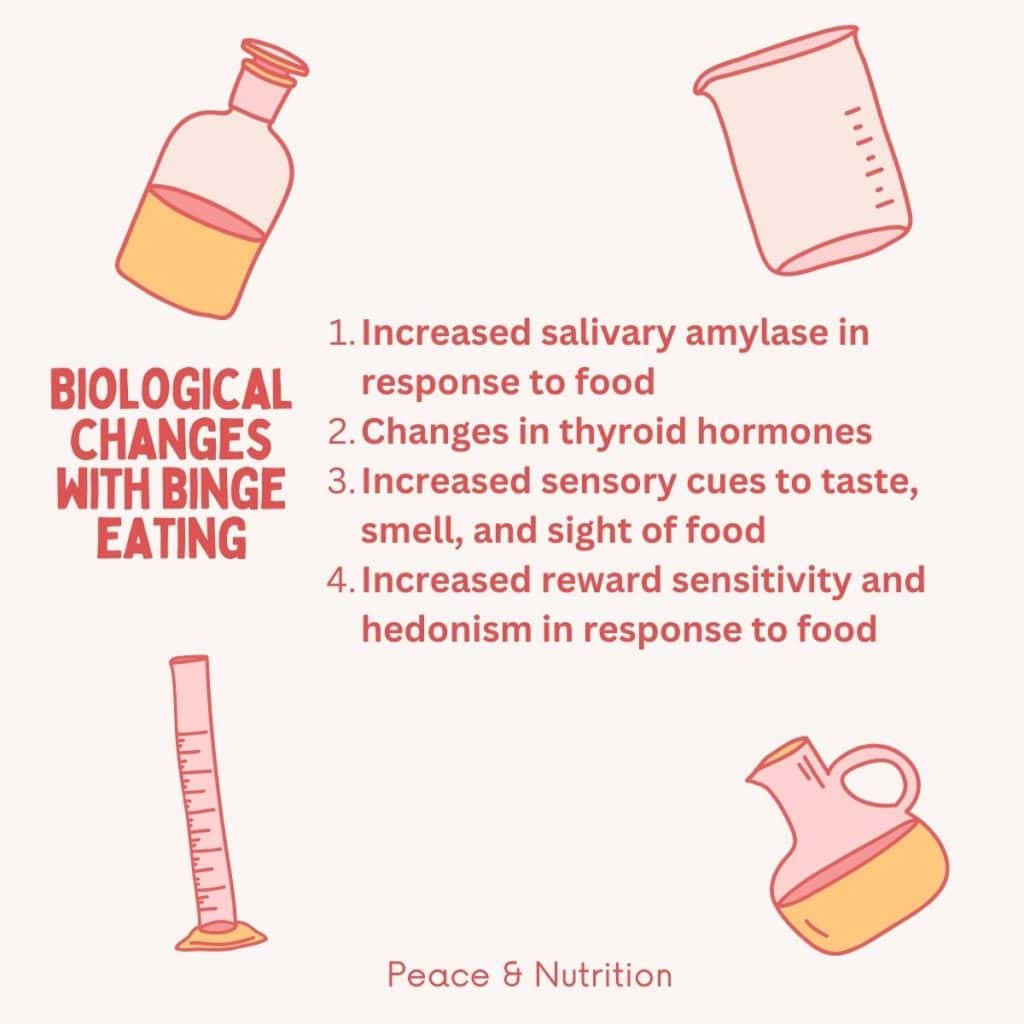
- Your body reduces the production of leptin (our satiety signals)
- Your body Increases the production of grehlin (your hunger signals)
- The rate of your enzymatic reactions change (to amp up your hunger)
- Your cortisol increases which causing you to crave calorie dense foods (and a lot of it)
- You have an Increase in salivation (starting the process of digestion and makes you hungrier)
- You experience a surge of neuropeptide Y (which causes intense cravings for carbohydrates)
- You have Increased dopamine in the brain while binging (which makes you want to eat even more)
And here’s a fun (and very annoying from the perspective of someone having a binge) fact: Salivation increases even if food isn’t present. Even if you’re just thinking about the food you’re body is going to put all the mechanisms in plate to eat as much as possible when it becomes available. This is sure to happen every time you restrict, or even think about restricting your food.
To put it simply your body hates when food is not available (intentionally or unintentionally) and it will do everything possible to make sure you get as much food as possible in times of “feast” when it follows a “famine.”
Binge Restrict Cycle In Eating Disorders
If you have an eating disorder your body is in starvation mode. The binge restrict cycle is extremely common in most eating disorders, and it plays a major role in helping the eating disorder seem logical. Not to mention the very important role it has in keeping you alive when you’re doing your best to avoid food.
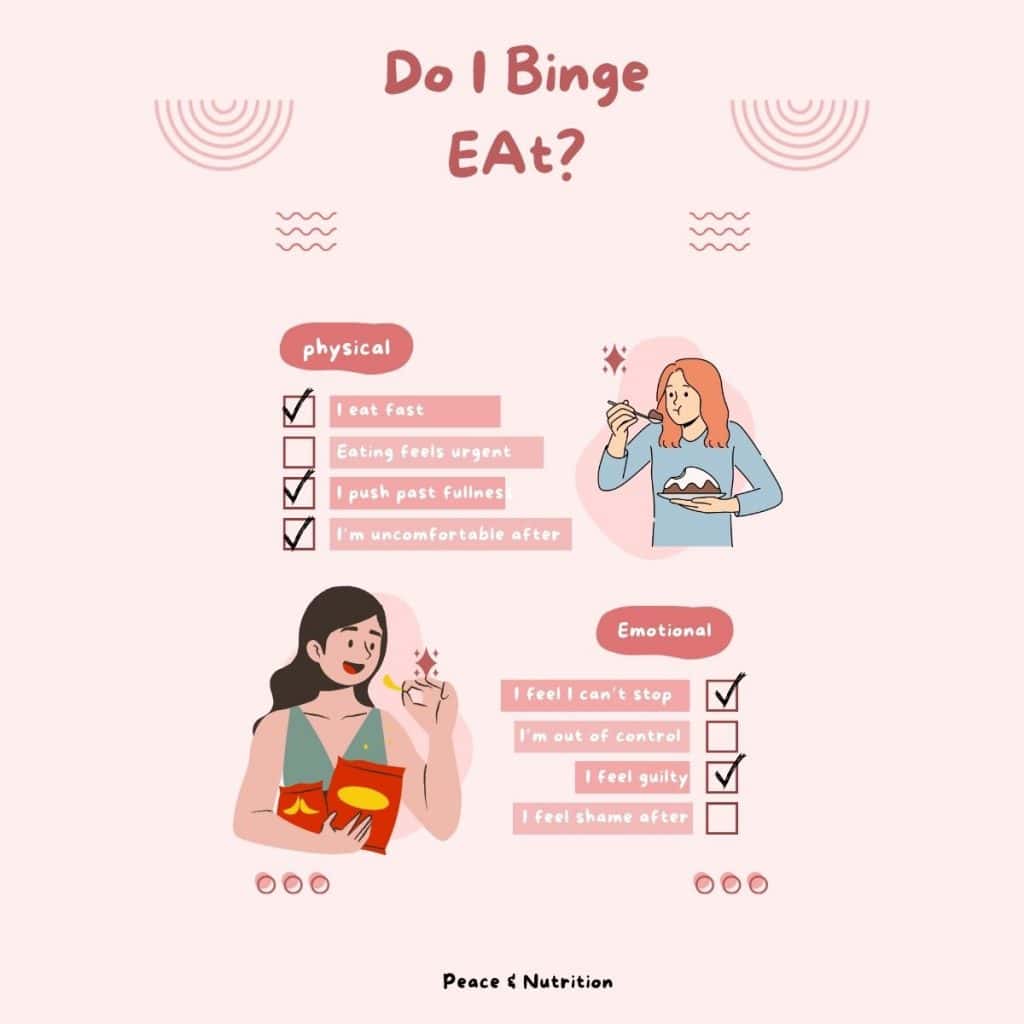
At its heart, the cycle is a tug-of-war between food deprivation and loss of control when food is in front of you. It typically starts with restriction including skipping meals, counting calories, cutting out entire food groups, or trying to “eat as little as possible.” Eventually, this leads to a binge, where you eat large amounts of food quickly, often feeling absolutely out of control and shameful while doing so.
During weight restoration from an eating disorder you will probably binge eat at some point. This is a normal and necessary part of eating disorder recovery. This is your bodies way of trying to protect itself. It is very likely that your eating disorder voice is very loud in the experience of binging and is telling you to immediately STOP! However, the more you try to resist these binge episodes the more you will binge and the longer it will take for you to heal your body from starvation.
Binge eating in recovery from starvation happens because of:
- Hypermetabolism in anorexia
- Microbiome shifts
- Alteration in enzymatic reactions
- Anatomical changes in GI tract
- Hormonal shifts

19 Tips To Stop Binging And Restricting
To break the binge restrict cycle, you need to create a partnership of trust with your body. You need to trust your body to tell you what it needs and wants to properly nourish itself and it needs to trust you to provide the food.
Here are a few tips to stop the binge/restrict cycle:

- Don’t try not to binge. In order to stop bingeing you MUST binge.
- Focus on eliminating food restriction rather eliminating binge eating
- Eat fear foods regularly
- Identify triggers for binging (are you eating food when you feel lonely, bored, stressed, or have a large school project due)
- Eat regularly. Eat breakfast within 2 hours of waking up and then every 3-4 hours. Build a support team. This can include having meals and snacks with family or friends or a trained professional like a dietitian or therapist.
- Eat full meals and snacks
- Follow a recovery meal plan if you have an eating disorder
- Never use exercise to earn the food you have eaten
- Eat normally even after a binge
- Delay your binge (If there is a common time you binge eat try to push it off for five minutes)
- Schedule a binge (for example plan to binge at 6p.m. so you know to expect it)
- Use urge surfing or shift up your routine to disrupt a binge (knit, plan an instrument)
- Break your “binge rituals” (not eating with activities that may trigger a binge, having an interactive activity ready for the time of day I usually binge)
- Use an intuitive eating hunger scale once your hunger and fullness cues return
- Get rid of your scale and stop body checking, these are common triggers for both restricting and binging
- Eat food with family and friends you trust to reduce the risk of a binge or restriction
- Give yourself unconditional permission to eat
- Eat a variety of food groups
- Stop mentally restricting your food
Its important to know that if you have binge eating your hunger and fullness cues may be messed up. This means that using tools like intuitive eating will not be appropriate until your hunger cues have returned and will likely exacerbate the issue.
Self Care For Binging and Restricting
Breaking the binge restrict cycle can be an emotional roller coaster. The binge restrict cycle can feel overwhelming, and practicing mental self-care is an important step toward breaking free. One of the most powerful tools is self compassion. Instead of criticizing yourself after eating, try reminding yourself that one meal or one binge does not define you, and that it’s all an important part of learning and healing. Emotionally and physically offer yourself grace during this time.
Some things you can do to reduce stress that comes along with bingeing and restricting include:
- Practice Respecting your body. It helps to foster a positive relationship with your body rather than focusing on restrictive food thoughts or body flaws.
- Stop body checking. Body checking can increase anxiety and lead to even more body checking.
- Stop counting calories. Get rid of your food tracking apps, your pedometer and any other tracking tool. This will help you feel more food freedom immediately.
- Practice joyful movement. Learning peaceful ways to move your body such as yoga, dancing, or a sport can help you create powerful moments with your body and reduce intrusive thoughts.
- Make a list of eating disorder recovery quotes or body-positive mantras. One or two recovery quotes you can recite to yourself on repeat can help you on tough days in recovery or when your toxic inner voice gets too loud for you to focus on positive thoughts.
- Use body-positive journal prompts to journal your experiences daily. This can. help you re frame negative thoughts and highlight your progress in recovery.
- Use recovery bible verses. These are excellent powerful tools if you are faith based or even powerful words of wisdom if you don’t identify with any certain faith. Keep these words available on hard days with negative thoughts get loud.
Remember, breaking the binge restrict cycle takes time. In my experience, truly recovering from binge eating can take anywhere from 6 months to 2 years. It will involve coping with both binge episodes and resisting the urge to restrict your food. Seeking out support such as trusted friends or professionals that can help you work through difficult emotions will be beneficial.
The faster you’re able to seek out the support you need to help you cope with binge eating and eliminate food restriction, the sooner you will be able to break free from the binge restrict cycle. Working with an experienced professional such as an eating disorder dietitian can significantly reduce the amount of time it takes to eliminate restriction and binging.

- 100 Snack Ideas for Eating Disorder Recovery - April 18, 2026
- Diet Culture is Toxic - December 22, 2025
- I Don’t Eat Anything White - December 11, 2025