Table of Contents
Snacks can feel like one of the hardest parts of eating disorder recovery. Not because they’re complicated, but because they challenge that toxic inner voice that’s screaming in your head (aka the eating disorder voice) about how “snacks are bad.”
You might feel like snacks are inconvenient, not necessary, or interrupt your meal-time rules. This is exactly why snacks are not optional in recovery. They are a therapeutic tool, and a requirement for re-nourishment.
Let’s dig into why snacks in eating disorder recovery are necessary, what ed recovery snacks look like, and when you should have them. In this space, we’re going to re-frame snacks from something chaotic or fear-inducing into something structured, supportive, and predictable.
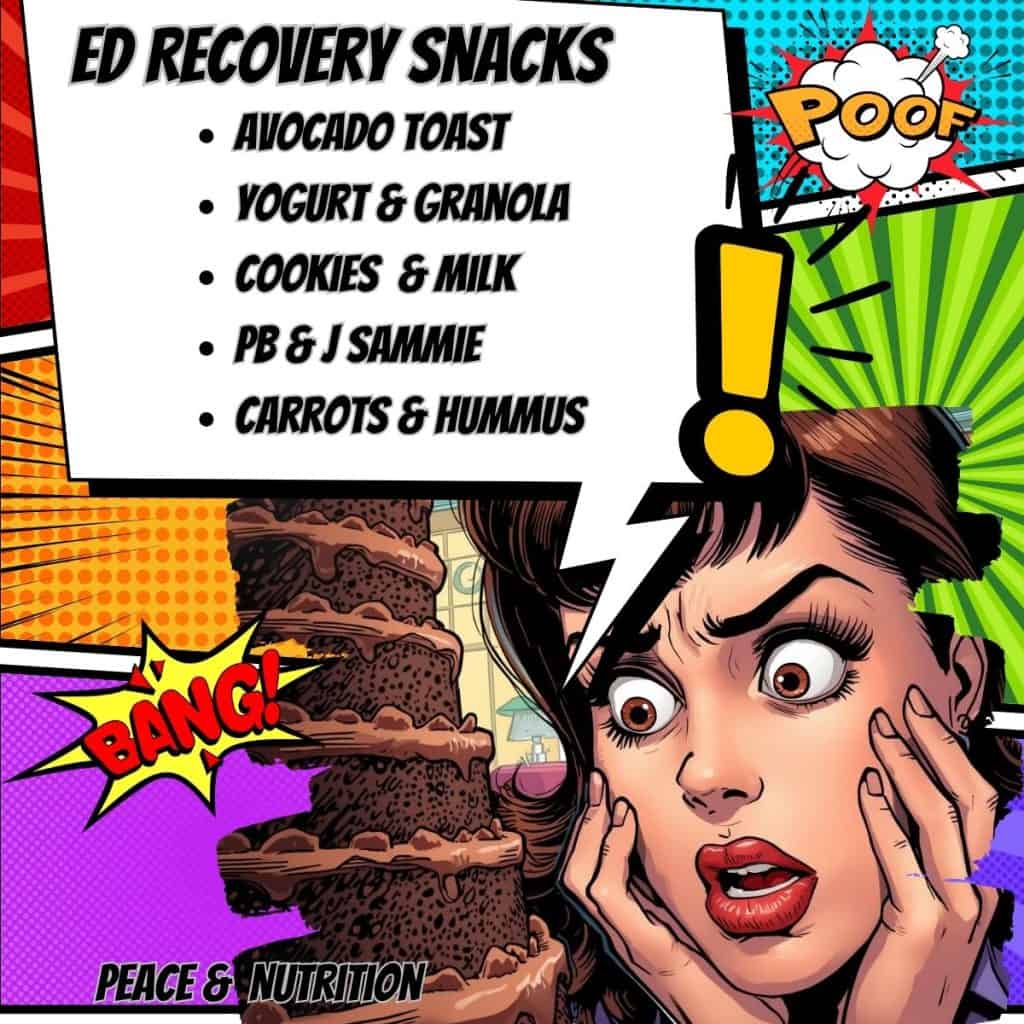
Why Snacks Matter In Eating Disorder Recovery
Snacks help stabilize blood sugar, reduce the intensity of urges to binge or restrict, and rebuild trust with your body. But more than that, snacks are often where the real healing happens, because they sit right in the middle of the day, in the middle of real life, where routines break down and old patterns tend to creep in.
When your body knows it can rely on consistent nourishment, everything starts to shift: your hunger cues, your energy, your thoughts, and your ability to stay present in your life. When used as part of an eating disorder meal plan, snacks are a powerful part of recovery.
Snacks aren’t the problem. They’re part of the solution.
Snacks in ED recovery help with:
- Stabilize blood sugar and prevent hypoglycemia
- Reduce urges to binge eat
- Rebuild hunger and fullness cues
- Lower anxiety and guilt around food
- Normalize eating patterns
- Challenge fear foods
- Reduce night time eating or chaos
- Assist with meeting calorie needs and weight restoration goals
Building Balanced Snacks in Recovery
Meals and snacks in eating disorder recovery should look different. Your body is constantly metabolizing food throughout the day. Snacks are designed to provide sufficient energy between your main meals.
Meals in eating disorder recovery should contain carbohydrate, protein, fats(dessert), fruits and/or vegetables. A snack should contain 1-2 of these food choices you would find in a full meal.
Examples of building a snack in ED recovery:
- Carbohydrate + protein
- Protein + fruit
- Vegetable + carbohydrate
- Dessert + fruit
Your eating disorder recovery meal plan should include 3 snacks per day. One snack between breakfast and lunch, one snack between lunch and dinner, and one snack after dinner.
The lines between meals and snacks should not be hard rules as you progress in eating disorder recovery. For example, some snacks may have a little more, some may have a little less and that can be okay.
Not every snack has to be “perfectly balanced” to still be enough. However, it’s important to not let this flexibility be dominated by your eating disorder voice!

Energy-Dense Snacks for Weight Restoration
- Apple + peanut butter (carb + fat)
- Banana + almond butter (carb + fat)
- Crackers + cheese (carb + protein/fat)
- Greek yogurt + berries (protein + carb)
- Toast + avocado (carb + fat)
- Pretzels + hummus (carb + protein/fat)
- Granola bar + milk (carb + protein)
- Trail mix (carb + fat/protein)
- Yogurt + granola (protein + carb)
- Rice cakes + peanut butter (carb + fat)
- Banana + yogurt (carb + protein)
- Cheese stick + grapes (protein/fat + carb)
- Cottage cheese + pineapple (protein + carb)
- Bagel + cream cheese (carb + fat)
- Muffin + latte (carb + protein)
- Toast + scrambled egg (carb + protein)
- Cereal + milk (carb + protein)
- Oatmeal + nuts (carb + fat/protein)
- Smoothie with fruit + yogurt (carb + protein)
- Apple slices + cheese (carb + protein/fat)
- Pita + tzatziki (carb + protein/fat)
- Tortilla chips + guacamole (carb + fat)
- Crackers + tuna salad (carb + protein)
- Toast + butter + jam (carb + fat)
- Granola + milk (carb + protein)
- Popcorn + nuts (carb + fat/protein)
- Rice pudding (carb + protein)
- Chia pudding (carb + fat/protein)
- Fruit + handful of cashews (carb + fat/protein)
- Mini bagel + peanut butter (carb + fat/protein)
- String cheese + pretzels (protein + carb)
- Yogurt drink + crackers (protein + carb)
- Croissant + cheese (carb + fat/protein)
- English muffin + jam + butter (carb + fat)
- Toast + Nutella (carb + fat)
- Graham crackers + peanut butter (carb + fat/protein)
- Chocolate milk + banana (protein + carb)
- Dried fruit + almonds (carb + fat/protein)
- Fruit cup + cheese cubes (carb + protein/fat)
- Applesauce + nuts (carb + fat/protein)
- Pancake + sausage link (carb + protein/fat)
- Waffle + peanut butter (carb + fat/protein)
- Mini sandwich (carb + protein)
- Turkey slices + crackers (protein + carb)
- Ham + cheese roll-ups + fruit (protein/fat + carb)
- Hummus + pita bread (carb + protein/fat)
- Yogurt parfait (protein + carb)
- Oat bar + milk (carb + protein)
- Toast + cream cheese (carb + fat/protein)
- Apple cinnamon oatmeal + walnuts (carb + fat/protein)
- Peanut butter toast + banana (carb + fat/protein)
- Smoothie with milk + berries (protein + carb)
- Frozen yogurt + granola (protein + carb)
- Cereal bar + yogurt (carb + protein)
- Banana bread + milk (carb + protein)
- Cookies + milk (carb + protein/fat)
- Brownie + milk (carb + protein/fat)
- Energy bites (carb + fat/protein)
- Rice Krispie treat + cheese stick (carb + protein/fat)
- Goldfish crackers + yogurt (carb + protein)
- Pudding cup + graham crackers (carb + protein/fat)
- Chocolate + almonds (carb + fat/protein)
- Fruit smoothie + nut butter (carb + fat/protein)
- Toast + ricotta + honey (carb + protein)
- Bagel + turkey (carb + protein)
- Croissant + ham (carb + protein/fat)
- Apple + sunflower seed butter (carb + fat/protein)
- Yogurt + banana slices (protein + carb)
- Peanut butter crackers (carb + fat/protein)
- Fruit leather + nuts (carb + fat/protein)
- Pita chips + cheese (carb + protein/fat)
- Cheese quesadilla (carb + protein/fat)
- Half PB&J sandwich (carb + fat/protein)
- Toast + cottage cheese + jam (carb + protein)
- Yogurt-covered pretzels (carb + protein/fat)
- Mini muffin + cheese stick (carb + protein/fat)
- Scone + latte (carb + protein)
- Oatmeal cookie + milk (carb + protein/fat)
- Fruit + peanut butter crackers (carb + fat/protein)
- Granola clusters + yogurt (carb + protein)
- Crackers + avocado mash (carb + fat)
- Toast + egg salad (carb + protein/fat)
- Fruit + cottage cheese (carb + protein)
- Mini pancakes + yogurt (carb + protein)
- Blueberry muffin + Greek yogurt (carb + protein)
- Toast + peanut butter + honey (carb + fat/protein)
- Trail mix + dried cranberries (fat/protein + carb)
- Bagel chips + hummus (carb + protein/fat)
- Granola bar + banana (carb + protein)
- Cheese crackers + fruit (carb + protein/fat)
- Chocolate-covered nuts (carb + fat/protein)
- Pita + peanut butter (carb + fat/protein)
- Mini yogurt smoothie with fruit (protein + carb)
- Toast + butter + sliced turkey (carb + protein/fat)
- Apple turnover + milk (carb + protein/fat)
- Frozen grapes + cheese (carb + protein/fat)
- Banana + handful of walnuts (carb + fat/protein)
- Crackers + egg salad (carb + protein/fat)
- Fruit + dark chocolate + almonds (carb + fat/protein)
- Recovery snack plate: crackers, cheese, fruit (carb + protein/fat)
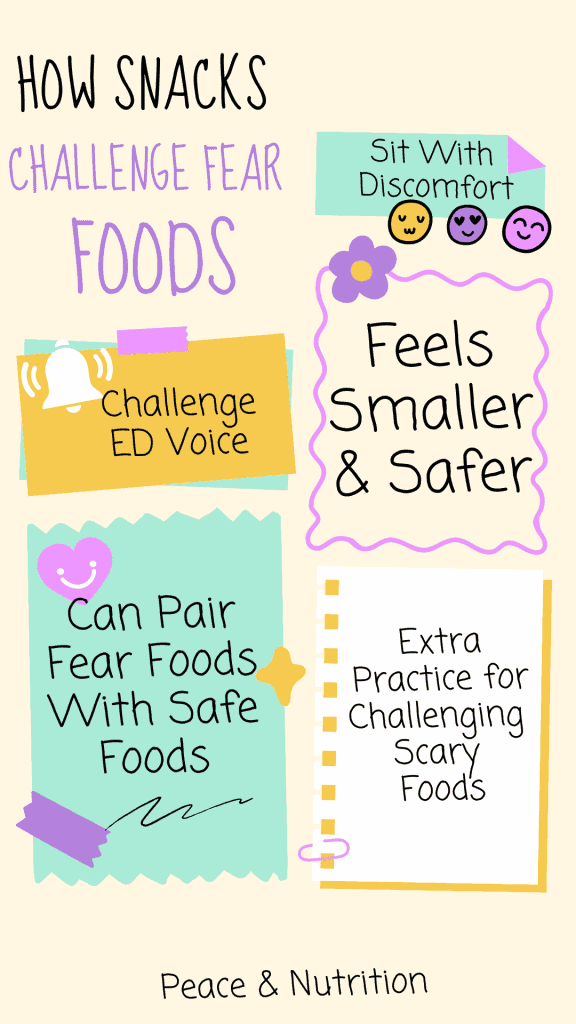
Challenging Fear Foods Through Snacks
Snacks are one of the most effective, low-pressure ways to challenge fear foods. That’s one key reason why they’re so useful in recovery in addition to providing additional energy to heal your body.
They challenge rules like:
- “I shouldn’t eat between meals”
- “I have to earn food”
- “Snacks don’t count” or “snacks are bad”
- “Snacks should be healthy”
- “I don’t deserve to eat.”
You can also use snacks as an opportunity to combine safe and fear foods. When you combine a fear food with a “safer” or more familiar food, it becomes less intense.Snacks can also help challenge all or nothing thinking (e.g. if I start eating this I won’t stop).
Putting a fear food into a snack (instead of a full meal) makes it feel more manageable. It also gives additional opportunities to put fear foods on the plate if you have a lot of them. Recovery isn’t about trying a fear food once, it’s about normalizing it over time
Every time you include a fear food and follow through with your next meal/snack as planned you take your power back from the eating disorder. Snacks help you learn you don’t need to compensate, you can handle discomfort, and you can eat without spiraling out of control.

- I only shop the perimeter of the grocery store - June 30, 2026
- 100 Snack Ideas for Eating Disorder Recovery - April 18, 2026
- Diet Culture is Toxic - December 22, 2025